
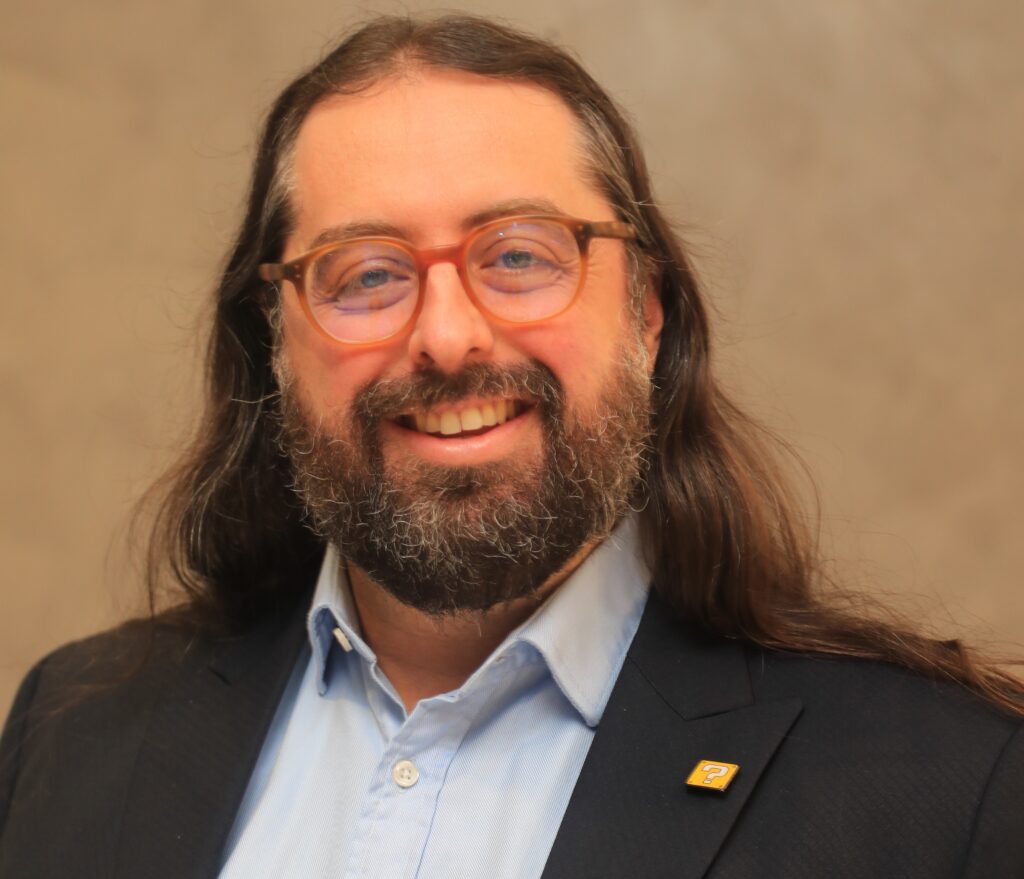
I am an advocate at the Johannesburg Bar, where I have spent the past fifteen years working at the intersection of constitutional law, human rights, and freedom of expression. My practice has placed me before the Supreme Court of Appeal and the Constitutional Court, where I have represented clients in some of South Africa’s most high-profile cases on the tension between free speech and hate speech. One such matter was the recent hate speech trial against the EFF and Julius Malema over the “Kill the Boer” chant. The case resonated so widely that it reached the international stage, with the President of South Africa questioned about it in the Oval Office.
I have made submissions to Parliament on proposed hate speech legislation and to the United Nations Committee on the Elimination of Racial Discrimination regarding South Africa’s rising racial tensions. I am regularly invited onto South African television to unpack constitutional developments and human rights issues for the broader public, bridging the gap between the complexity of the law and public understanding.
I currently serve as President of the Institute of Race Relations, South Africa’s oldest classical liberal think tank, where our mission is to defend individual rights, advance economic freedom, and safeguard democratic institutions. I also serve on the Council of the University of Cape Town, where I am a member of the Academic Freedom Committee. UCT has been beset by antisemitism and I am dedicated to reversing the anti-Israel stance that it has adopted. I aim to protect open inquiry and the exchange of ideas on campus.
My intellectual work extends beyond law and policy into philosophy. I co-host Brain in a Vat, a podcast that has broadcast over 200 conversations with leading philosophers worldwide, bringing rigorous academic thought to a broad global audience. I will be speaking at the upcoming Politics Philosophy and Economics conference in New Orleans on what campuses can learn from South African hate speech law, reflecting the international recognition of my expertise in this field.
I believe I was nominated for the Jewish Achiever Awards because my work embodies the Jewish tradition of intellectual courage, principled debate, and a commitment to justice. The Jewish community has a proud history of defending freedom of thought and minority rights, values which underpin my advocacy both inside and outside the courtroom. By taking on contentious cases, contributing to national and international debates, and leading institutions committed to liberty and academic freedom, I aim to strengthen South Africa’s democracy at a time when it faces profound challenges.
I would be a worthy winner in the eyes of the judges not only because of my professional track record, but also because my work demonstrates how the Jewish tradition of standing for justice and free inquiry can be lived out in practice. Whether in court, in Parliament, on campus, or in public debate, my contribution has been to defend the principle that societies are strongest when speech is free, rights are respected, and dialogue triumphs over division.
Vision:
For myself, I want to continue standing at the intersection of law, policy, and ideas. My goal is to deepen my role as both an advocate in the courtroom and a public intellectual outside it. Through my legal practice, I will keep testing the boundaries of constitutional principles in South Africa’s highest courts, ensuring that free speech, equality, and human dignity are defended. Beyond litigation, I see myself expanding platforms like my podcast and public speaking work, making complex philosophical and legal questions accessible to a wider audience.
For my business, understood in the broad sense of my professional ecosystem—the Bar, the Institute of Race Relations, and my academic and media work—the vision is to strengthen institutions that uphold liberty, accountability, and intellectual rigor. At the Bar, that means mentoring younger advocates and helping build a culture of fearless, principled advocacy. At the IRR, it means ensuring South Africa has an independent, classical liberal think tank capable of shaping national debates with evidence, courage, and clarity. And in my academic and media work, it means fostering spaces where diverse voices and ideas can be heard without fear of censorship or intimidation.
For South Africa, my vision is a society where freedom of thought and expression are not just tolerated but celebrated. I want to see a South Africa where individuals are judged not by race or group identity but by their ideas, talents, and contributions. A country where robust debate replaces division, where the rule of law protects the vulnerable and restrains the powerful, and where young people are inspired to believe in the promise of a free and open society.
Ultimately, my vision is one where law, institutions, and culture align to preserve the freedoms that make human flourishing possible.