
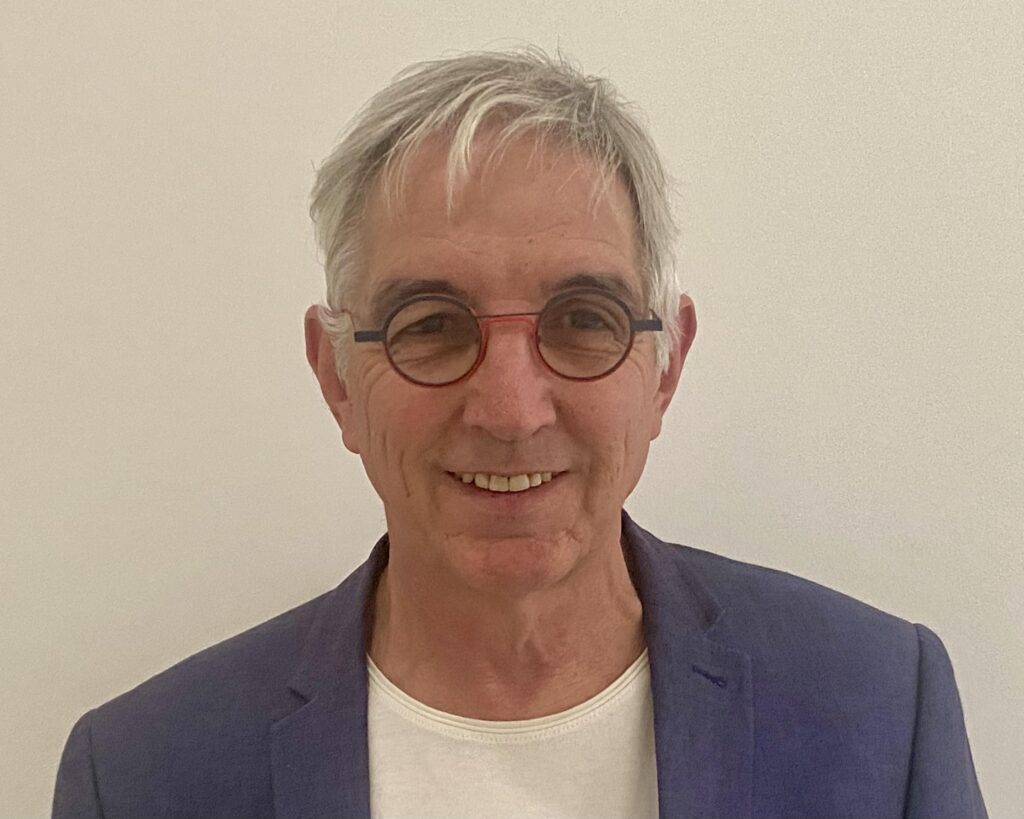
My professional life has been in academia, rising to the highest leadership positions at South Africa’s two leading universities – Dean of Health Sciences at Wits and Vice-Chancellor of UCT.
I trained as a doctor with postgraduate qualifications in public health. I worked first in the field of health policy and economics in a research unit at Wits University. At a relatively young age, 40, I was requested to apply for, and was then appointed as dean of the Faculty of Health Sciences at Wits. This was in 1996 at a time of tremendous change in SA, and the University and Faculty recognised that it too needed to transform. The faculty believed I was the right person for this in part because I had been an anti-apartheid activist since my student days, from SRC president at Wits around the time of the Soweto uprising, to a health activist in the United Democratic Front and the NAMDA, to my professional policy work highlighting the impact of apartheid on health.
As dean, one is not just a manager of heads of disciplines and departments and budgets, but responsible for providing academic leadership. I initiated new degrees, led a radical overhaul of the 6-year medical degree, introduced digital resources into the curricula (this was in the 1990s), created new departments in fields that were growing in importance, and new research platforms and resources. A dean of health sciences also has to engage politically with the national and provincial health departments that provide the services and employ most of the consultants that train our students. The shift in government funding away from tertiary hospitals towards primary health care presented a threat to Wits’ ability to train superspecialists and prompted me to propose and raise funds for the creation of a private teaching hospital, which became the Wits Donald Gordon Hospital. Other tasks of a dean included shaping the admissions policy to transform the student body, engaging with alumni around the world to promote the image of the faculty and to raise funds.
I was appointed to the position of VC of UCT in 2008. Here too, the role is defined primarily as academic leadership, with many similar responsibilities to a dean. But clearly, as an expert in one academic area, one cannot give disciplinary type leadership to the many areas and faculties outside one’s own field. So the role is to see the big picture. How are universities changing globally? What are the big questions that need addressing through research that inevitably cross disciplinary and faculty boundaries – think climate change, inequality, mental health – and how can structures be created within the university that break the disciplinary silos. In addressing these types of issues, I created a new academic position of Pro-Vice Chancellor that reported directly to me. Several were appointed, with budgets, each to address a specific grand challenge, and tasked to create teaching and research programmes that crossed faculties. I also facilitated the creation of new research institutes and schools in public governance, design thinking and neurosciences. Another aspect of the academic leadership role is to be thinking about the changing world of work and how the educational programmes need to adapt to meet the needs of the market. A VC is also the CEO of the institution, responsible to a Board for annual budgets, audits, fund raising and investment strategies for reserves and endowments; human resources, marketing, communications, student recruitment, IT services; running accommodation, catering, transport and health services equivalent to a small city; and much more. And, in the last two decades, one of the most important roles of the VC, and certainly it was the most challenging one for me, was to transform the institutional culture. The task of articulating, promoting and interpreting the values of the institution in thoughtful ways, listening and responding to challenges, being the public face of the institution’s position on any number of issues, ultimately falls to the VC.
The Vice-Chancellor (VC) of the University of Cape Town is arguably the most significant and prestigious leadership position in higher education in South Africa. So, the appointment to this position is itself a mark of professional excellence. Unusually amongst VCs at any university, I held that position for the maximum period allowed – two five year terms. I believe the nomination also acknowledges my track record of innovation, institutional growth, successful funding raising, and transformation, both at Wits as dean of the Faculty of Health Sciences (1996-2006) and at UCT as VC (2008-2018). During the student and worker protests that shook the whole country between 2015 and 2017, (the Rhodes and Fees Must Fall protests), I was often in the public eye as a leader managing that crisis – successfully, I believe – and perhaps this is another reason I have been nominated. Finally, I was the first Jewish Vice-Chancellor, not just of UCT but of any university in South Africa, and indeed no others have yet been appointed.
I am now formally retired but continue to write and lecture in the field of leadership and ethics and decision making. I sit on a number of boards, including NGO boards, where I hope to ‘pay it forward’ – offering them my experience as a former head of large organisations, and my support and reputation as a guarantor of good governance.
For SA, I feel positive enough, in spite of the enormous challenges, to want to live out my life here and to hope that my children and grand children will too. I think whites continue to reap the benefits and advantages of their privileged position under apartheid, and accordingly have a special obligation to address the enormous inequality that is apartheid’s legacy, even if it has been exacerbated by post apartheid mis-management and corruption. But I do feel we are facing up to the problems and that the political system is maturing in a way that will enable us to deal more constructively with the challenges.
Recreational activities
Saxophone, Running, gym, hiking, reading